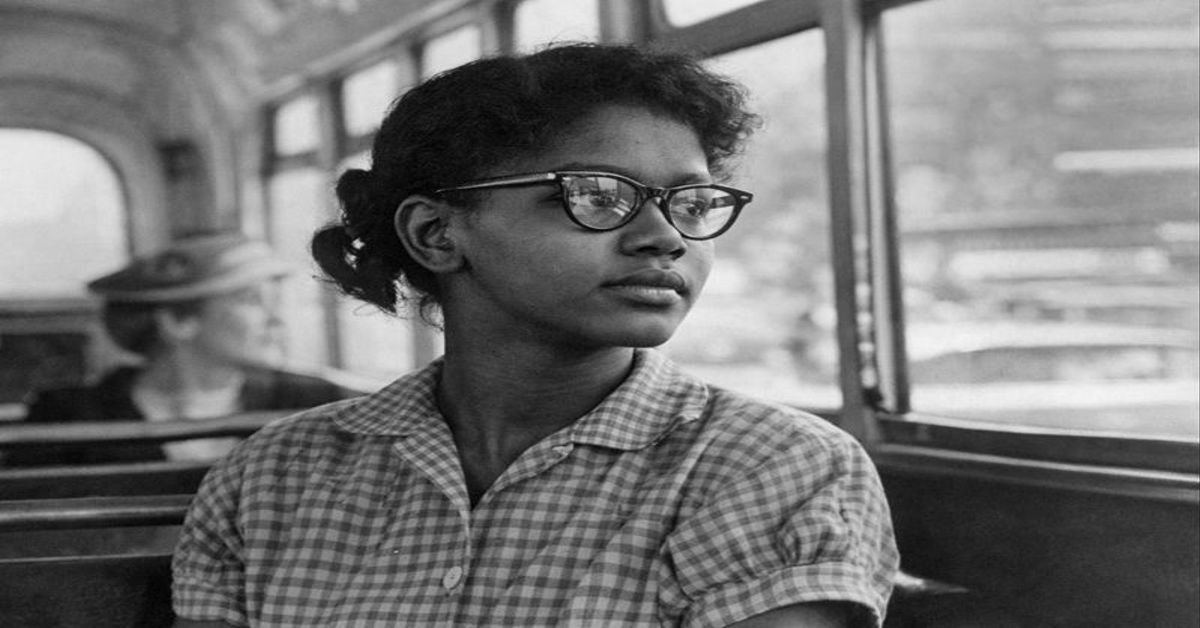
Claudette Colvin, whose courageous stand against racial segregation predated the famous Rosa Parks protest, has died at the age of 86, leaving behind a powerful yet often overlooked legacy in American civil rights history.
A Quiet Act That Changed History
Claudette Colvin, a key but under-recognized figure in the US civil rights movement, died of natural causes in Texas, according to a statement released by the Claudette Colvin Legacy Foundation on Tuesday.
Colvin was just 15 years old when she was arrested on March 2, 1955, after refusing to surrender her seat to a white passenger on a segregated bus in Montgomery, Alabama. Her act of defiance occurred nine months before Rosa Parks’ protest that later gained global recognition.
Despite her young age, Colvin’s decision would become a critical catalyst for the legal and social battles that followed.
“History Had Me Glued to the Seat”
In later interviews, Colvin recalled the moment that changed her life.
“People ask me why I refused to move, and I say history had me glued to the seat,” she said during an interview in Paris in April 2023.
Colvin explained that another seat was available, but racial segregation laws prevented a white woman from sitting near her.
“A white person wasn’t supposed to sit close to a negro,” she said, describing the rigid racial rules of the time.
Her refusal led to her arrest after a bus driver contacted the police, alleging that Black girls were seated too close to white passengers.
Arrest, Detention, and Legal Resistance
Following her arrest, Colvin was briefly jailed for disturbing public order. Rather than fading into history, she went on to play a direct legal role in dismantling segregation.
In 1956, Colvin became one of four Black women plaintiffs in a landmark federal lawsuit challenging bus segregation in Montgomery.
Landmark Case That Ended Segregated Transport
The lawsuit proved successful, leading to a ruling that segregation on public transportation was unconstitutional.
Impact of the Case
| Area Affected | Outcome |
|---|---|
| City Buses | Racial segregation outlawed |
| Trains | Segregation policies dismantled |
| Aircraft | Equal seating mandated |
| Taxis | Non-discriminatory service enforced |
This decision reshaped public transportation across the United States and strengthened the legal foundation of the civil rights movement.
Setting the Stage for the Montgomery Bus Boycott
Colvin’s arrest came during a period of growing frustration among Black residents in Montgomery over daily humiliation on public buses.
Later that year, Rosa Parks’ arrest in December 1955 sparked the historic Montgomery Bus Boycott, a yearlong protest that brought national attention to racial injustice.
The boycott also propelled Reverend Martin Luther King Jr. into national leadership and is widely regarded as the beginning of the modern civil rights movement.
Too Often Overlooked’
Montgomery Mayor Steven Reed acknowledged that Colvin’s bravery has long been underappreciated.
“Her action helped lay the legal and moral foundation for the movement that would change America,” Reed said.
He added that Colvin’s courage came early and at significant personal cost, yet her contribution remained largely outside public recognition.
“Movements are built not only by the most famous names, but by those who act first — quietly and bravely.”
A Legacy That Still Resonates
The Claudette Colvin Legacy Foundation described her life as one of lasting influence.
“She leaves behind a legacy of courage that helped change the course of American history,” the foundation said.
Her story continues to inspire conversations about youth activism, justice, and the importance of recognizing lesser-known contributors to historic movements.
Civil Rights Debate in Today’s America
Colvin’s passing comes amid renewed debate over civil rights policies in the United States.
This week, the NAACP, the country’s largest civil rights organization, criticized former President Donald Trump over comments suggesting that civil rights protections unfairly disadvantaged white Americans.
Trump, in a recent interview with The New York Times, argued that some policies from the civil rights era resulted in “reverse discrimination.”
NAACP President Derrick Johnson strongly rejected the claim, stating that such remarks misrepresent history and undermine efforts to protect marginalized communities.
Remembering Claudette Colvin
Claudette Colvin may not have been widely celebrated in her youth, but her impact is undeniable. Her bravery as a teenager helped ignite legal challenges that reshaped American society.
As history continues to be examined and re-examined, Colvin’s story stands as a reminder that transformational change often begins with quiet courage.
1 thought on “Claudette Colvin civil rights pioneer”