Zelenskyy confirms landmark diplomatic meeting as Washington intensifies efforts to broker peace
Introduction
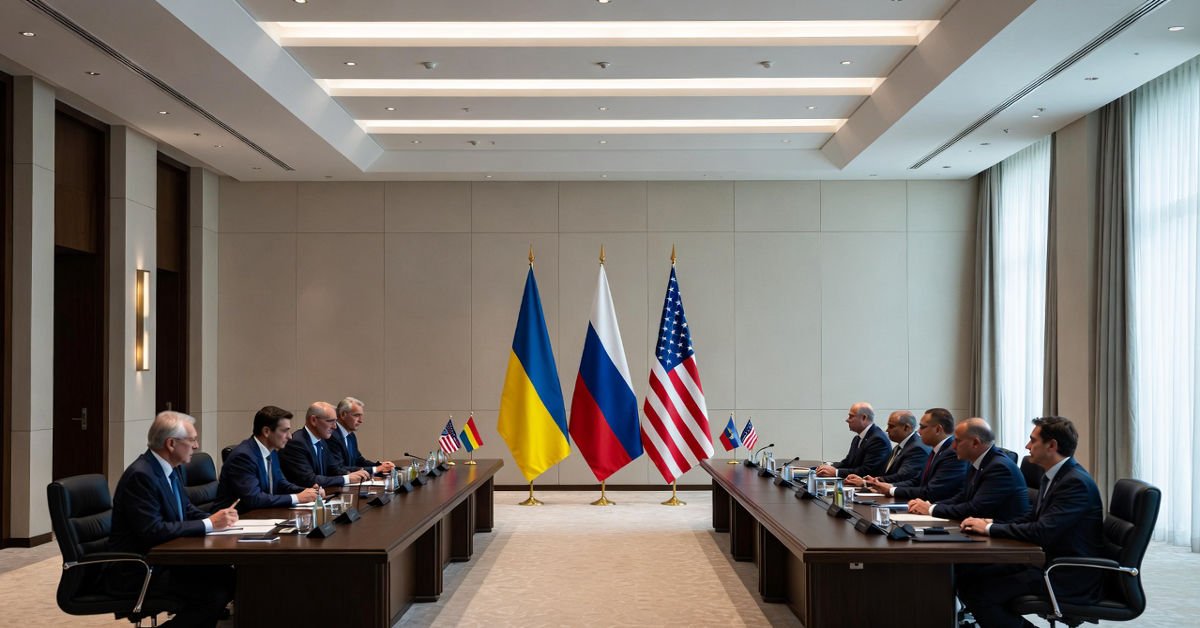
For the first time since Russia launched its full-scale invasion of Ukraine nearly four years ago, officials from Ukraine, Russia, and the United States are set to participate in trilateral discussions aimed at ending the war. Ukrainian President Volodymyr Zelenskyy confirmed that the talks will take place in Abu Dhabi on Friday and Saturday, marking a potentially significant turning point in international diplomacy surrounding the conflict.
The announcement comes amid renewed pressure from Washington to accelerate peace negotiations, even as fighting and civilian suffering continue across Ukraine.
Historic Trilateral Talks Confirmed
President Zelenskyy described the upcoming discussions as the first trilateral meeting involving all three countries since the war began.
“I think this is good,” Zelenskyy said, referring to the direct engagement between Kyiv, Moscow, and Washington.
The meetings will reportedly include military-to-military working groups, a format intended to address operational and security concerns alongside political negotiations. While Ukraine and the United States have confirmed their participation, Russia has not yet publicly commented on the proposed talks.
Zelenskyy–Trump Meeting Sets the Stage
The announcement followed a high-profile meeting between President Zelenskyy and US President Donald Trump on the sidelines of the World Economic Forum (WEF) in Davos.
Trump described the discussion as “good,” while acknowledging that ending the war remains an ongoing process. Zelenskyy, meanwhile, called the meeting “productive and substantive”, revealing that key documents related to Ukraine’s future security and reconstruction are nearing completion.
According to Zelenskyy, negotiations have advanced on:
-
Security guarantees for Ukraine
-
Post-war economic recovery
-
Revisions to earlier US proposals that Kyiv felt disproportionately favoured Moscow
Progress but One Key Issue Remains
US special envoy Steve Witkoff stated that negotiations have made significant progress, with only one unresolved issue left on the table.
“We’ve got it down to one issue… and that means it’s solvable,” Witkoff said at Davos.
Although Witkoff did not specify the issue, Zelenskyy previously identified two major sticking points:
-
The future of territories occupied by Russia
-
Control of the Zaporizhzhia nuclear power plant, currently under Russian occupation
Key Issues in the Ukraine Peace Negotiations
| Issue | Ukraine’s Position | Russia’s Position |
|---|---|---|
| Occupied Territories | Restoration of territorial integrity | Retention of seized areas |
| Zaporizhzhia Nuclear Plant | Return to Ukrainian control | Continued Russian control |
| Security Guarantees | Binding international guarantees | Opposition to NATO-aligned security |
| Post-war Reconstruction | Western-backed funding | Sanctions relief considerations |
US Diplomacy Expands to Moscow and Abu Dhabi
Following Davos, Witkoff and Jared Kushner, Trump’s son-in-law, travelled to Moscow for discussions with Russian President Vladimir Putin. From there, US officials are expected to proceed to Abu Dhabi to continue talks with both sides.
This diplomatic shuttle underscores Washington’s strategy of engaging all parties directly, while attempting to maintain momentum toward a negotiated settlement.
Zelenskyy’s Message at the World Economic Forum
Speaking to global leaders at the WEF, Zelenskyy reinforced Ukraine’s call for accountability and justice, arguing that Russian President Vladimir Putin should face international prosecution.
He also criticised European nations for failing to use frozen Russian assets to support Ukraine’s defence and reconstruction.
“This is the fourth year of the biggest war in Europe since World War II, and the man who started it is not only free, but fighting for his frozen money,” Zelenskyy said.
Trump’s Strong Rhetoric and NATO’s Caution
Trump reiterated his belief that both Putin and Zelenskyy are close to reaching a deal, though his remarks drew attention for their blunt tone.
NATO Secretary-General Mark Rutte, while praising Trump’s diplomatic efforts, cautioned against reducing military support prematurely.
“Peace talks are fantastic, but that will not happen tomorrow,” Rutte said, urging allies to remain focused on Ukraine’s defence.
War Continues as Talks Approach
Despite diplomatic developments, the humanitarian situation in Ukraine remains dire. Recent Russian missile and drone attacks have left large parts of Kyiv without electricity and heating, affecting nearly 3,000 residential buildings during sub-zero temperatures.
In southern Ukraine, Odesa Governor Oleh Kiper confirmed that a Russian drone strike hit a residential building, killing a 17-year-old, highlighting the ongoing civilian toll of the conflict.
Conclusion
The upcoming Abu Dhabi talks represent a rare moment of direct trilateral engagement between Ukraine, Russia, and the United States. While expectations remain cautious, the discussions signal renewed diplomatic urgency at a time when military escalation and civilian suffering persist.
Whether these talks can bridge the remaining gaps and lead to a sustainable peace remains uncertain—but for the first time in years, all sides will be sitting at the same table.