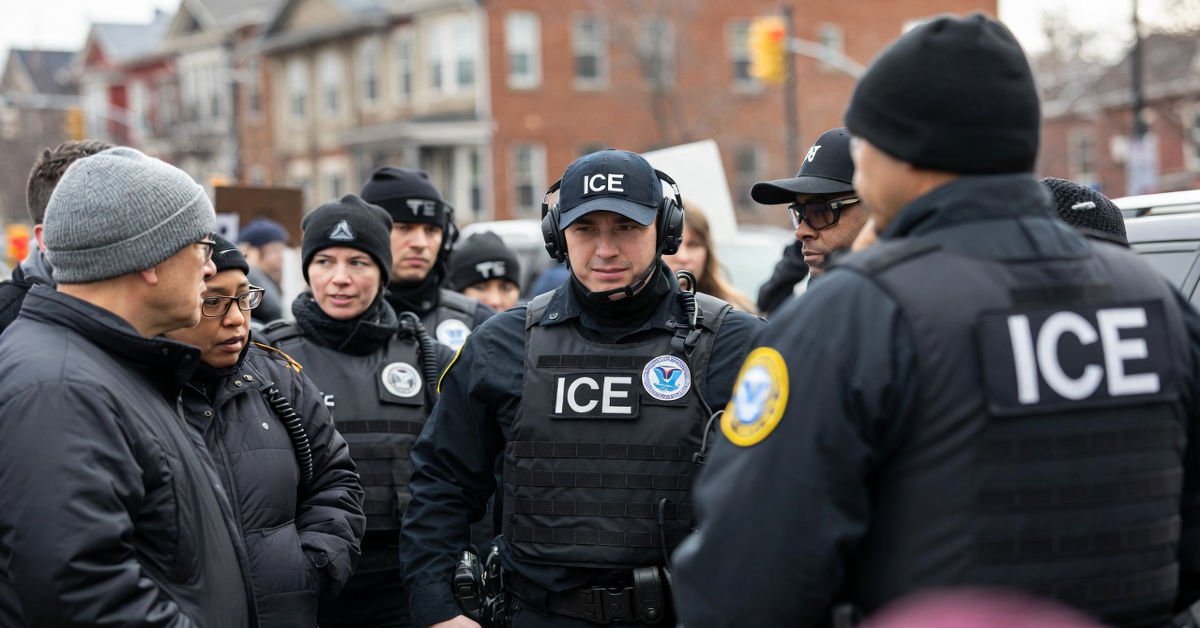
Recent events in Minneapolis, Minnesota, have reignited nationwide debates over the limits of federal immigration enforcement. The fatal shooting of US citizen Alex Pretti, 37, by Immigration and Customs Enforcement (ICE) agents during a demonstration against immigration crackdowns has sparked outrage, protests, and questions about Americans’ constitutional protections.
Videos circulating on social media show confrontations between ICE officers and Minneapolis residents, including cases of individuals being detained or questioned in public, and even inside their homes, raising concerns about the agency’s authority and the boundaries of legal enforcement.
This guide explains what the law allows ICE officers to do, what rights residents have, and how these rights differ in public spaces versus private homes.
Understanding Your Rights During ICE Encounters
Federal law permits ICE agents to arrest and detain individuals suspected of violating immigration rules. However, all residents, including undocumented immigrants, are protected under the Fourth Amendment, which safeguards against unreasonable searches and seizures.
Key Principles:
| Right | Explanation | Practical Implication |
|---|---|---|
| Fourth Amendment Protections | Limits ICE’s ability to conduct searches or detain without cause | You cannot be forced to answer questions or consent to a search without legal justification |
| Reasonable Suspicion | Needed for temporary detentions in public | ICE must have factual reasons beyond guesswork to suspect someone has committed a crime or violated immigration law |
| Probable Cause | Required for arrests | Agents need sufficient evidence to justify taking someone into custody |
“All law enforcement officers, including ICE, are bound by the Constitution,” says Alexandra Lopez, managing partner of a Chicago-based immigration law firm.
What Is a ‘Kavanaugh Stop’?
Historically, racial or ethnic profiling has been considered unconstitutional. However, a 2025 Supreme Court procedural opinion by Justice Brett Kavanaugh introduced the idea that “apparent ethnicity” could be considered as one factor in determining reasonable suspicion, provided it is combined with other evidence.
| Case | Year | Outcome | Significance |
|---|---|---|---|
| Noem vs Perdomo | 2025 | Lower court ruling stayed | Kavanaugh’s opinion allowed limited use of ethnicity as a factor in stops |
| Trump vs Illinois | 2025 | National Guard deployment blocked | Indicated a cautious approach toward race-based enforcement |
Legal experts caution that while the opinion gives ICE more discretion, it does not represent a definitive Supreme Court ruling on racial profiling.
Public Spaces vs. Private Homes
The Fourth Amendment sets stricter limits on ICE’s authority inside private homes. Unless residents consent or officers have a judicial warrant signed by a judge, law enforcement cannot enter.
Key Points:
-
A judicial warrant requires probable cause and must be reviewed by the courts.
-
Administrative ICE warrants, issued without judicial oversight, are typically used for arrests outside private residences.
-
A 2025 leaked ICE memo suggested officers could enter homes using administrative warrants alone if a final removal order exists. This practice is legally controversial and has not been tested definitively in court.
“People inside a home generally need not open the door and can demand to see a warrant,” explains law professor Rodney Smolla.
What to Do If Your Rights Are Violated
Options for legal recourse are limited. Federal law generally protects officials from civil lawsuits for actions taken in the scope of their duties. Some avenues, such as the Federal Tort Claims Act, may allow claims under specific circumstances, but success is difficult.
| Option | Challenge | Notes |
|---|---|---|
| Federal Lawsuit | High legal barriers | Most individuals cannot easily pursue claims against ICE |
| Federal Tort Claims Act | Complex and restrictive | Requires navigating federal court procedures |
| Civil Rights Advocacy | Indirect | Organizations can offer legal assistance and policy advocacy |
“It’s not an easy path, and most people can’t afford to retain a lawyer,” says David Rudovsky, a University of Pennsylvania law professor.