Introduction
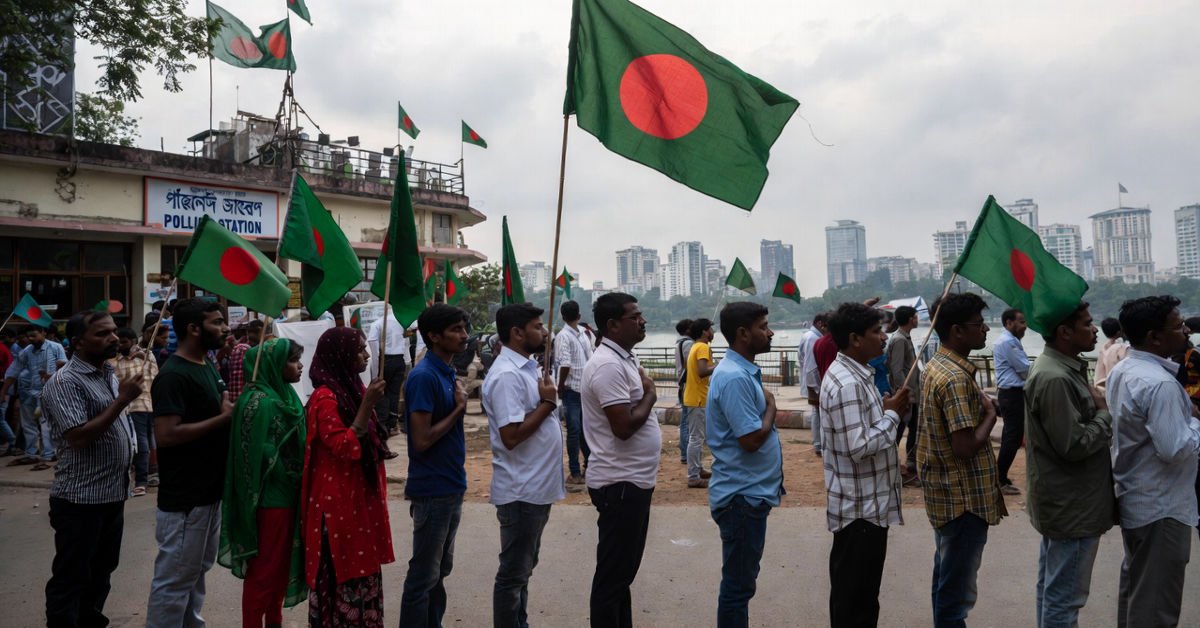
Bangladesh is preparing for a landmark general election on February 12, 2026, marking the first national polls since the dramatic overthrow of former Prime Minister Sheikh Hasina during the 2024 student-led uprising.
The vote is expected to reshape Bangladesh’s foreign policy and redefine its relationships with three powerful neighbours: India, China, and Pakistan.
Currently governed by an interim administration headed by Nobel Peace Prize laureate Muhammad Yunus, the country is witnessing an intense contest between the Bangladesh Nationalist Party (BNP) and the Jamaat-e-Islami (JIB). The long-dominant Awami League has been barred from participating following its role in the violent crackdown on protesters in 2024.
Political analysts say the election outcome could determine Bangladesh’s geopolitical direction for the next decade.
Background: A Nation After Political Upheaval
Sheikh Hasina, now living in exile in India, was convicted in absentia by Bangladesh’s International Crimes Tribunal for authorising lethal force during the 2024 protests, which resulted in approximately 1,400 deaths.
Her removal marked what experts describe as a “paradigm shift” in Bangladesh’s foreign relations:
-
Relations with India have sharply deteriorated
-
Ties with Pakistan have unexpectedly warmed
-
Strategic cooperation with China has expanded rapidly
According to global governance scholar Khandakar Tahmid Rejwan, Bangladesh’s once predictable diplomatic alignment has been fundamentally reversed.
India-Bangladesh Relations: From Partnership to Strain
For decades, India viewed Bangladesh as one of its closest regional allies. Under Hasina’s leadership, cooperation expanded in:
-
Security
-
Energy
-
Trade
-
Counterterrorism
Trade Snapshot (Before Hasina’s Removal)
| Category | Value (USD) |
|---|---|
| Indian exports to Bangladesh | $11.1 billion |
| Bangladeshi exports to India | $1.8 billion |
| Major goods | Textiles, electricity, steel, garments |
However, relations cooled dramatically after India refused to extradite Hasina. Anti-India protests grew inside Bangladesh, and accusations of mistreatment of Hindu minorities further strained diplomatic ties.
India’s exclusion of Bangladesh from the ICC Men’s T20 World Cup intensified public anger and led Pakistan to boycott its match against India in protest.
How India Views the Election
India hopes the election produces a government willing to restore dialogue and stability.
Experts believe New Delhi would be most comfortable with a BNP-led government, while remaining cautious about a Jamaat victory due to security concerns.
Indian officials have already initiated diplomatic outreach to both BNP and Jamaat leaders, signalling pragmatic engagement regardless of the result.
Foreign Minister S. Jaishankar recently stated India supports a “democratic, peaceful and inclusive Bangladesh.”
Pakistan-Bangladesh Relations: A Renewed Opening
Since Hasina’s departure, Pakistan has actively pursued improved relations with Dhaka:
-
Direct trade resumed for the first time since 1971
-
Direct flights restarted after 14 years
-
Military and defence talks resumed
-
High-level visits exchanged
Analysts note Pakistan’s strategy focuses more on diplomacy and security cooperation rather than large-scale economic investment.
Pakistan also sees an opportunity to counter India’s regional influence by strengthening ties with Bangladesh.
How Pakistan Views the Election
Pakistan would prefer a Jamaat-led government but is prepared to work with BNP as well.
Experts say Islamabad’s main concern is preventing Bangladesh from restoring close ties with India, which would undermine Pakistan’s recent diplomatic gains.
Still, observers believe any Bangladeshi government will prioritise national interest rather than align exclusively with Pakistan.
China-Bangladesh Relations: A Growing Strategic Partnership
China has emerged as Bangladesh’s most consistent foreign partner regardless of political change.
Under the interim government:
-
Over $2.1 billion in Chinese investments and loans have been secured
-
Infrastructure and defence cooperation expanded
-
Talks on fighter jet purchases began
-
Support pledged for Rohingya refugee management
Beijing was among the first countries to recognise and support the Yunus administration after Hasina’s removal.
China’s View of the Election
China values stability above ideology. Its primary objectives are:
-
Protecting Chinese investments
-
Ensuring law and order
-
Preventing Western or US influence
-
Maintaining influence in South Asia
Unlike India, Beijing maintains open communication with all political parties and has no declared preference for the election outcome.
Analysts say China will support whichever government emerges victorious, focusing on continuity rather than political alignment.
What Is at Stake for Bangladesh
This election will shape Bangladesh’s:
-
Diplomatic identity
-
Economic partnerships
-
Regional security posture
-
Internal political legitimacy
Key Strategic Questions
| Issue | Impact |
|---|---|
| India relations | Border security & trade |
| China investments | Infrastructure & defence |
| Pakistan ties | Regional power balance |
| Domestic stability | Investor confidence |
| Minority rights | International reputation |
Conclusion
Bangladesh’s February election is not just a domestic political contest — it is a turning point for South Asian geopolitics.
India seeks a return to stability.
Pakistan hopes to consolidate influence.
China aims to secure its investments and expand regional presence.
Regardless of who wins, Bangladesh will need to balance competing interests carefully while restoring internal unity after years of political turmoil.
As voters head to the polls, the outcome will echo far beyond Dhaka — reshaping alliances across South Asia.
1 thought on “Bangladesh election geopolitical stakes”