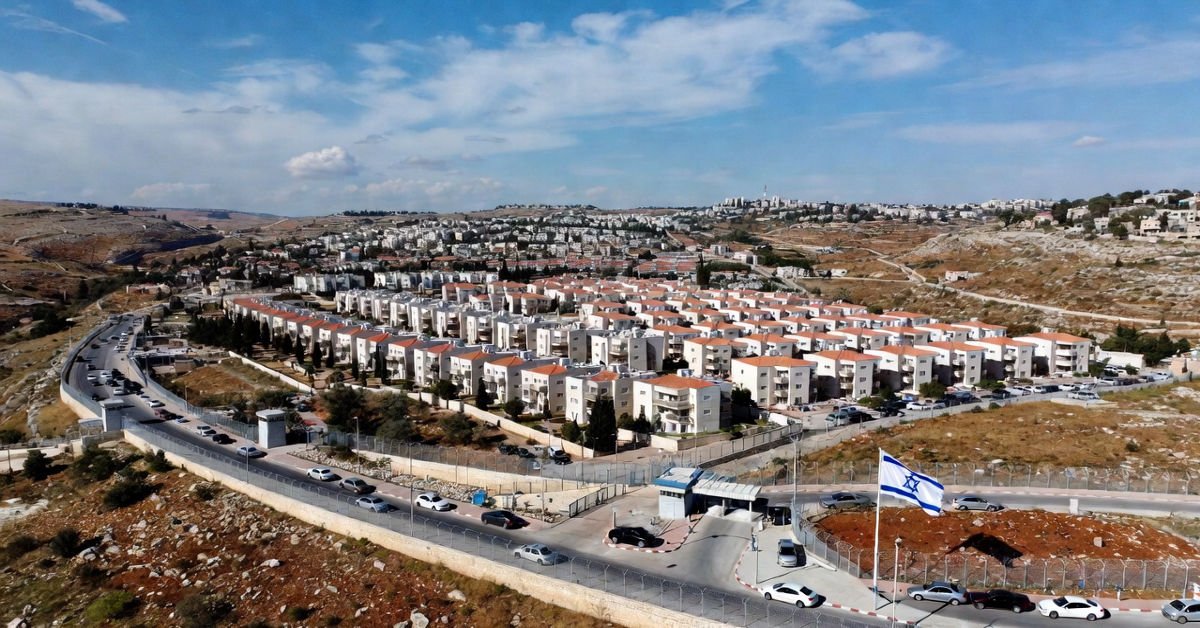
The United States has announced that it will begin offering limited in-person consular services in the Israeli settlement of Efrat, located in the occupied West Bank. According to an official statement from the US Embassy in Jerusalem, passport and related services will be available starting February 27.
This marks the first time the United States has provided consular services directly inside an Israeli settlement in the West Bank. A spokesperson quoted by Reuters confirmed that this move represents a new operational step in U.S. diplomatic outreach in the region.
Background and Location Context
Efrat is situated between the Palestinian cities of Bethlehem and Hebron in the occupied West Bank. The territory is home to nearly three million Palestinians who seek it as part of a future independent state.
Under international law, Israeli settlements in the occupied West Bank are considered illegal. Despite this, settlement expansion has continued for years and remains a highly sensitive political and humanitarian issue.
The U.S. Embassy also stated that similar on-site consular services are being planned for:
-
The Palestinian city of Ramallah
-
The Israeli settlement of Beitar Illit near Bethlehem
-
Cities inside Israel, including Haifa
Currently, U.S. passport and consular services are primarily offered at the embassy in West Jerusalem and a branch office in Tel Aviv.
Why This Decision Matters
This development is significant for thousands of U.S.-Israeli dual nationals living in settlements. Efrat, in particular, is known to be home to many American immigrants.
According to the International Court of Justice, approximately 465,000 Israeli settlers live across around 300 settlements and outposts in occupied Palestinian territory. Tens of thousands of them reportedly hold dual U.S.-Israeli citizenship, creating practical demand for local consular access.
Recent Political Developments
This month, Israel’s right-wing government led by Prime Minister Benjamin Netanyahu approved measures that expand Israeli control over parts of the West Bank and designate large areas of Palestinian land as Israeli “state property.”
These actions were widely criticized by more than 80 member states of the United Nations, which reiterated concerns over violations of international law and risks to long-term peace efforts.
Much of the West Bank remains under Israeli military control, with limited Palestinian self-rule in some areas administered by the Palestinian Authority.
U.S. Position on West Bank Annexation
U.S. President Donald Trump has stated publicly that he opposes formal annexation of the occupied West Bank by Israel. However, critics argue that the U.S. administration has not taken concrete steps to limit settlement expansion or reverse policies that may indirectly legitimize them.
The decision to offer consular services in Efrat has therefore drawn attention from international observers and human rights organizations, who view it as a symbolic shift in U.S. engagement with settlements.
Humanitarian and Security Situation
[Image: West Bank residential area with checkpoints]
Alongside settlement growth, Israeli military operations in the West Bank have intensified. These include raids, home demolitions, and arrests. Reports also indicate an increase in attacks by Israeli settlers against Palestinian communities, sometimes under the protection of Israeli soldiers.
According to United Nations data, at least 694 Palestinians were displaced from their homes in January alone due to settler violence and harassment. This figure represents the highest monthly displacement since the outbreak of the Gaza war in October 2023.
Key Facts Overview
| Category | Details |
|---|---|
| Service Start Date | February 27 |
| Location | Efrat settlement, West Bank |
| First of Its Kind | Yes – first U.S. consular service in a settlement |
| Planned Expansion | Ramallah, Beitar Illit, Haifa, and other Israeli cities |
| Settler Population | About 465,000 in occupied territories |
| International Reaction | Condemned by over 80 UN member states |
Timeline of Major Events
| Date / Period | Event |
|---|---|
| October 2023 | Gaza war escalates, regional tensions rise |
| January 2026 | 694 Palestinians displaced due to settler violence |
| February 27 | U.S. begins consular services in Efrat |
| Ongoing | Expansion of settlements and international criticism |
Expert Perspective
International law experts emphasize that diplomatic actions, even administrative ones such as passport services, can carry symbolic weight in contested territories. While the U.S. frames the move as a practical service for its citizens, critics argue it risks normalizing settlement activity in occupied land.
At the same time, U.S. officials maintain that providing consular access does not constitute formal recognition of sovereignty claims and is intended solely to support American nationals living in the area.
Conclusion
The decision by the United States to provide consular services in the West Bank settlement of Efrat reflects a complex intersection of diplomacy, legal debate, and on-the-ground realities. While it addresses logistical needs for U.S. citizens, it also raises broader questions about international law, settlement expansion, and the future of the Israeli-Palestinian conflict.