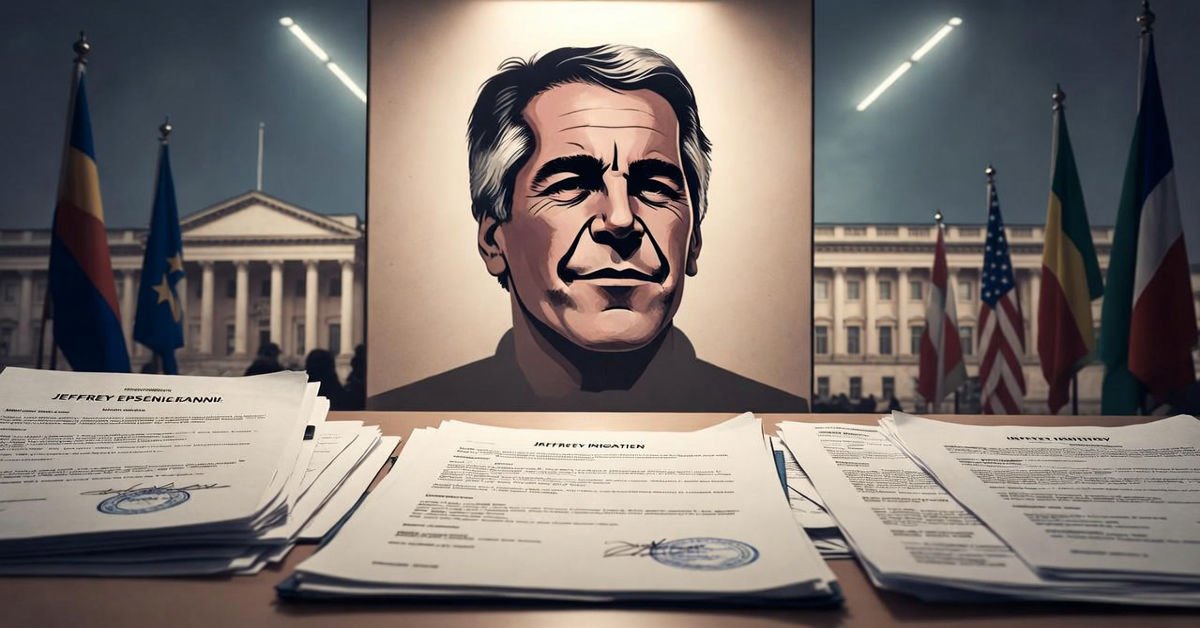
Epstein files political fallout Europe vs US have sparked intense political consequences across the United Kingdom and several European nations. In contrast, the reaction in the United States has been comparatively restrained, with limited legal accountability beyond previously convicted individuals.
This divergence highlights how governments interpret public responsibility, legal thresholds, and political ethics when confronting associations with convicted financier and sex offender Jeffrey Epstein.
How the Epstein Files Reshaped British Politics
Few scandals in recent British history have produced such rapid and dramatic reversals of fortune.
Former senior diplomat Peter Mandelson was arrested on suspicion of misconduct in public office after being questioned for allegedly leaking sensitive government information to Epstein during his tenure as a government minister in the early 2000s. He has since been released on bail but faces the possibility of criminal prosecution.
Only months earlier, Mandelson held one of the most prestigious diplomatic posts in the country. His downfall included:
-
Loss of his ambassadorial position
-
Police searches of his residence
-
Resignation from the House of Lords
-
Potential stripping of his title
If convicted, he could face a life sentence.
Prime Minister Keir Starmer faced sharp criticism for appointing Mandelson amid declining public trust. The decision triggered the resignation of his chief of staff and raised questions about the stability of his leadership.
Royal Family Under Unprecedented Scrutiny
The scandal extended into the British monarchy when Prince Andrew (also known as Andrew Mountbatten-Windsor) was arrested and questioned over alleged misconduct connected to Epstein. This marked the first detention of a senior royal in centuries.
King Charles III stated publicly that “the law must take its course.”
Royal biographer Andrew Lownie, who interviewed Virginia Giuffre, warned that the scandal could destabilize the monarchy if evidence showed wider knowledge of Andrew’s activities.
Europe’s Broader Political Response
Several European governments launched formal inquiries based solely on the appearance of public figures in the Epstein documents.
Key European Developments
-
France: Former culture minister Jack Lang resigned from his leadership role at a Paris cultural institution after authorities sought to question him about contacts with Epstein.
-
Norway: Former prime minister Thorbjorn Jagland was charged with gross corruption after disclosures that Epstein paid for travel and accommodation for him and his family.
-
Norway’s ambassador to Jordan, Mona Juul, resigned following reports that Epstein left money to her children in his will.
-
Crown Princess Mette-Marit issued a public apology after documents showed she vacationed at one of Epstein’s properties.
-
Slovakia: National security adviser Miroslav Lajcak stepped down after disclosures about his association with Epstein.
Across Europe, political consequences followed swiftly, even when criminal liability had not yet been established.
Comparison of Political Fallout: Europe vs United States
| Region | Government Response | Political Consequences | Legal Action |
|---|---|---|---|
| United Kingdom | Police investigations and arrests | Resignations, royal scrutiny, leadership instability | Active criminal probes |
| France & Norway | Ministerial questioning and charges | High-profile resignations | Formal indictments |
| Slovakia | Immediate resignation | Political accountability enforced | Review of conduct |
| United States | Congressional hearings | Reputational damage only | Limited prosecutions |
Why Has the US Response Been More Limited?
In the United States, anger over Epstein’s crimes has existed for years. Lawmakers Ro Khanna and Thomas Massie led bipartisan efforts to release the files, arguing that a wealthy elite had escaped justice.
Despite this, only Epstein and his longtime associate Ghislaine Maxwell have faced criminal convictions. Maxwell is currently serving a 20-year sentence for sex trafficking offenses.
Federal records identified several alleged co-conspirators, including:
-
Lex Wexner
-
Epstein’s former assistant Lesley Groff
-
Modeling agent Jean-Luc Brunel (who died in custody in France)
None of these individuals has faced a US conviction related to trafficking charges.
The lack of prosecutions spans multiple administrations, from George W Bush through Barack Obama, Donald Trump, and Joe Biden.
Who Has Been Affected in the United States?
Several prominent Americans have stepped back from professional roles:
-
Former Treasury Secretary Lawrence Summers took leave from teaching duties at Harvard University.
-
Brad Karp resigned as chair of Paul Weiss law firm.
-
The National Football League reviewed correspondence between Epstein and a New York Giants co-owner.
-
Physician Peter Attia resigned from corporate and media positions after emails with Epstein surfaced.
Others named in documents, including Elon Musk, denied wrongdoing. Former President Bill Clinton testified before Congress about his association with Epstein.
Expert Analysis: Accountability vs Reputation
Political analysts argue that European governments treat document disclosure as sufficient grounds for inquiry, while US authorities require higher evidentiary thresholds for prosecution.
This difference reflects:
-
Stronger political ethics enforcement in parts of Europe
-
Greater emphasis on criminal burden of proof in the US
-
Institutional reluctance to reopen decades-old cases
Conclusion
The Epstein files have exposed a stark contrast between Europe and the United States. In Europe, investigations, resignations, and charges followed swiftly. In the US, the fallout has been largely reputational rather than legal.
The scandal underscores a global debate about elite accountability, transparency, and whether political systems can truly hold powerful individuals responsible for their associations.
1 thought on “Epstein Files Fallout: Europe Faces Political Reckoning While the US Response Remains Muted”