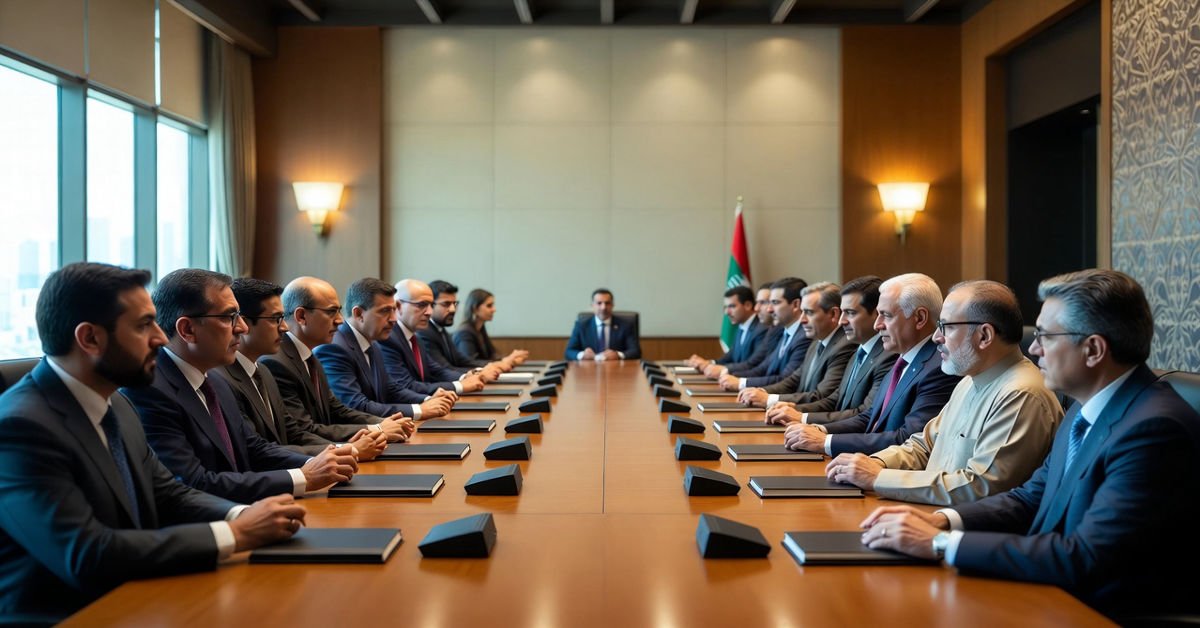
The recent round of negotiations between Iran and the United States in Muscat has reopened diplomatic channels, yet it stopped short of producing a concrete agreement. While both sides agreed to continue discussions, the atmosphere of mistrust and ongoing military pressure raises an important question: are these talks laying the groundwork for peace, or simply delaying further escalation?
This high-level engagement comes at a critical moment for global security. After months of rising tensions and military signaling, even a limited return to dialogue signals that neither side has fully closed the door on diplomacy. However, the gap between conversation and consensus remains wide.
Overview of the Muscat Talks
Negotiators from both countries met for several hours on February 6, maintaining their established positions. Iran emphasized that discussions should focus strictly on nuclear matters, whereas the United States sought a broader framework covering missile development, regional security concerns, and humanitarian issues.
Although no breakthrough emerged, the willingness to meet again suggests that both governments recognize the risks of abandoning negotiations entirely.
Key Facts About the Muscat Meeting
| Aspect | Details |
|---|---|
| Location | Muscat, Oman |
| Date | February 6 |
| Main Focus | Nuclear program vs. broader security framework |
| Outcome | No deal, but agreement to continue talks |
| Strategic Importance | First major engagement since the 2025 military escalation |
Even without immediate results, diplomatic continuity is often viewed by analysts as a stabilizing factor in volatile geopolitical environments.
Diplomacy Under Strategic Pressure
One of the most notable aspects of the meeting was the composition of the American delegation, which included senior diplomatic officials and a high-ranking military commander. This signaled that negotiations were taking place alongside visible military readiness rather than separate from it.
From Washington’s perspective, maintaining strategic pressure can encourage urgency in negotiations. However, for Tehran, the presence of military power during diplomatic talks may reinforce long-standing concerns about coercion rather than cooperation.
Statements from both sides reflected this divide. American leadership described the talks positively and suggested that the consequences of failing to reach an agreement could be significant. Iranian officials, meanwhile, highlighted that negotiations conducted under perceived threat could complicate progress rather than accelerate it.
Trust is often the most valuable currency in diplomacy, and rebuilding it is rarely quick or straightforward.
The Root Challenge: Deep Mutual Distrust
The structural challenge shaping today’s negotiations stems from years of strained relations. After the United States withdrew from the 2015 nuclear agreement, Iranian leaders questioned whether future commitments would be durable. Subsequent steps by Iran to expand nuclear activities further eroded confidence on the international stage.
Major Sources of Tension
| Issue | Impact on Negotiations |
|---|---|
| Withdrawal from earlier agreements | Reduced confidence in long-term commitments |
| Expanded nuclear activities | Increased global concern |
| Economic sanctions | Heightened pressure on Iran’s economy |
| Security disputes | Complicated diplomatic agenda |
This cycle of action and reaction has created an environment where even small concessions require significant political courage on both sides.
For any future agreement to hold, each country must believe that compromise will lead to meaningful benefits rather than additional demands. Restoring that belief is one of the toughest challenges negotiators face.
Sanctions and Strategy
Shortly after the Muscat talks concluded, new sanctions targeting vessels and entities linked to Iranian petroleum transport were announced. Officials described the move as part of a broader pressure strategy.
Whether planned in advance or timed strategically, such measures send a dual message: negotiations can proceed, but economic pressure will remain. For Iran, which has repeatedly argued that sanctions relief should accompany progress, this approach reinforces skepticism.
Diplomatic experts often note that simultaneous negotiation and pressure can produce mixed results — motivating engagement while also deepening caution.
What Was Actually Discussed?
Despite limited public details, reports indicate that some technical ideas were explored. Iran is believed to have rejected demands for zero uranium enrichment, a stance widely expected given its long-standing policy. Instead, conversations reportedly touched on options such as adjusting existing nuclear stockpiles — a more technical pathway that could support future compromise.
There were also indications that direct interaction occurred between senior officials, marking a shift from previously indirect communication through intermediaries. Even limited face-to-face dialogue can accelerate complex negotiations by reducing misunderstandings.
Oman characterized the meeting as an effort to create suitable conditions for renewed diplomatic and technical discussions — a cautious but realistic description.
Critical Factors That Will Shape the Next Phase
The coming weeks may determine whether the Muscat talks become a foundation for progress or merely a pause in rising tensions.
Key Tests Ahead
| Factor | Why It Matters |
|---|---|
| Scope of negotiations | Disagreements over agenda could stall talks early |
| Nuclear posture | Any expansion could disrupt diplomacy |
| Military activity | Strategic deployments influence negotiation climate |
| Sanctions timeline | Continued penalties may affect trust |
| Backchannel diplomacy | Quiet mediation often enables breakthroughs |
The relatively short gap expected before the next round suggests a shared awareness that the diplomatic window may not remain open indefinitely.
A Likely Scenario: Managed Stalemate
Many analysts believe the most realistic short-term outcome is neither a dramatic agreement nor open conflict, but a carefully managed stalemate. In such situations, governments maintain firm public positions while avoiding actions that would permanently derail dialogue.
While this approach may lack the optimism of a landmark deal, it can help prevent sudden escalation — an outcome welcomed by many countries observing developments closely.
Regional stakeholders have consistently encouraged restraint and stability, recognizing that any major confrontation would carry far-reaching economic and security consequences.
Why These Talks Still Matter
Although the Muscat meeting did not produce a formal agreement, it accomplished several important objectives:
-
It confirmed that communication channels remain open.
-
It demonstrated a willingness to continue engagement.
-
It showed that direct contact between senior officials is possible.
However, maintaining a channel is not the same as building a lasting solution. The period between negotiation rounds is often when misunderstandings or strategic missteps can emerge.
The next meeting is unlikely to deliver an immediate resolution, but it could reveal whether both sides are gradually constructing a framework for stability — or simply postponing a more difficult confrontation.
For now, diplomacy has bought time. Whether that time is used to build trust or merely delay further tensions will define the trajectory of one of the world’s most closely watched geopolitical relationships.