Introduction
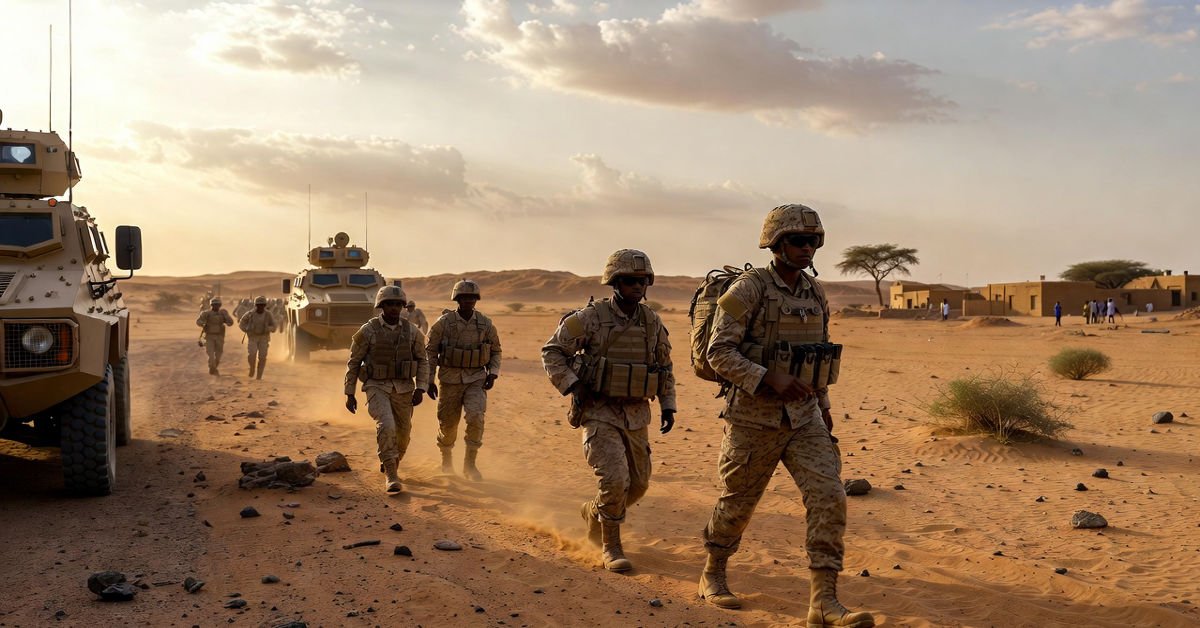
West Africa’s Sahel region is entering a new and dangerous phase of militarisation. Recent US air strikes in northwest Nigeria, the creation of rival regional military alliances, and shifting foreign partnerships are reshaping the region’s security landscape. While these actions are presented as decisive moves against terrorism, experts warn that escalating military responses alone will not defeat extremist groups and may instead increase the risk of interstate conflict.
Rather than stabilising the region, growing military competition between blocs such as the Alliance of Sahel States (AES) and the Economic Community of West African States (ECOWAS) could undermine long-term peace and open the door to wider geopolitical rivalries.
Rising Military Actions Across the Sahel
In late December, the United States conducted air strikes targeting ISIS-linked militants in northwest Nigeria. US President Donald Trump described the operation as a “powerful and deadly strike” and vowed further action to prevent extremist groups from gaining ground.
Just days earlier, the newly formed Alliance of Sahel States (AES) — made up of Mali, Burkina Faso and Niger — launched a joint military force of around 5,000 troops, portraying it as a step toward security independence.
At the same time, ECOWAS announced plans for a massive 260,000-strong counterterrorism force, backed by an estimated $2.5 billion annual budget for logistics and frontline operations.
Competing Military Forces in West Africa
| Alliance | Member States | Force Size | Main Supporters | Objective |
|---|---|---|---|---|
| AES | Mali, Niger, Burkina Faso | 5,000 troops | Russia | Security autonomy |
| ECOWAS Force | 15 West African nations | 260,000 troops | US, France, EU | Counterterrorism |
| US Operations | Nigeria-focused | Air strikes | United States | Target extremist groups |
From Cooperation to Confrontation
Until recently, counterterrorism efforts in the Sahel relied on broad cooperation between African and international partners, including ECOWAS, the African Union, the United Nations, the European Union, and countries such as France and the United States.
Operations like the African-led mission in Mali (2013) and the EU-backed G5 Sahel force (2017–2023) demonstrated shared responsibility for security, even when disagreements arose.
This cooperative framework collapsed after the 2023 military coup in Niger. ECOWAS threatened military intervention to restore constitutional order, which Niger’s new rulers viewed as hostile. In response, Niger, Mali and Burkina Faso withdrew from existing security arrangements and created the AES, declaring their intent to protect sovereignty from Western influence.
This marked a fundamental shift from collaboration to confrontation.
New Geopolitical Tensions
The AES has turned toward Russia for security assistance, reducing ties with Western partners. This has increased geopolitical friction across West Africa.
Recent incidents have illustrated how fragile the situation has become:
-
Nigeria intervened militarily to counter an attempted coup in Benin.
-
Shortly afterward, a Nigerian military aircraft landed in Burkina Faso, which the AES labeled a violation of its airspace.
-
Reports of French intelligence support to Nigeria raised concerns among AES leaders about renewed Western involvement.
With Nigeria now expanding cooperation with the United States after the December air strikes, tensions between ECOWAS and AES forces continue to grow.
The Risk of Interstate Conflict
The presence of rival military forces operating in overlapping border regions creates a dangerous environment. Terrorist groups often operate across porous borders, and air strikes or ground operations could easily spill into neighbouring territories.
Key Risks
-
Accidental clashes between AES and ECOWAS forces
-
Expansion of proxy conflicts backed by foreign powers
-
Weakening of coordinated counterterrorism efforts
-
Greater civilian displacement and instability
Global Power Rivalry in West Africa
Analysts warn that West Africa could become a new arena for great-power competition, with:
-
Russia backing AES states
-
The US and France supporting ECOWAS
This dynamic resembles Cold War-era bloc politics, where regional conflicts were influenced by global rivalries. Such a scenario could paralyse diplomatic solutions and intensify instability, especially if disputes reach the United Nations Security Council.
Why Militarisation Alone Will Fail
History shows that terrorism cannot be defeated by military force alone. Armed groups exploit:
-
Poverty
-
Weak governance
-
Community grievances
-
Lack of education and jobs
Military operations may suppress violence temporarily, but without political dialogue, economic development, and local trust-building, extremist groups can regroup and expand.
A Path Toward Stability
Experts argue that reconciliation between AES and ECOWAS is essential. ECOWAS, as Africa’s most experienced regional organisation, must lead diplomatic efforts to rebuild trust and avoid confrontation.
Possible Solutions
| Strategy | Purpose |
|---|---|
| Diplomatic dialogue | Reduce tensions between blocs |
| Joint security protocols | Prevent accidental clashes |
| Respect for sovereignty | Encourage cooperation |
| Human security focus | Protect civilians |
| Development investment | Address root causes of extremism |
Francophone ECOWAS states could act as mediators, while Nigeria’s influence should be exercised carefully to avoid further polarisation.
Conclusion
The Sahel stands at a crossroads. Militarisation may appear decisive, but it risks transforming terrorism into a wider regional war fueled by foreign rivalries. Without cooperation between AES and ECOWAS, the region could slide into chaos that benefits extremist groups rather than defeats them.
True security will depend not on rival armies and air strikes, but on diplomacy, economic stability, and respect for sovereignty. How West Africa navigates this moment will shape not only its own future, but the stability of the African continent as a whole.
3 thoughts on “Militarising the Sahel and terrorism”