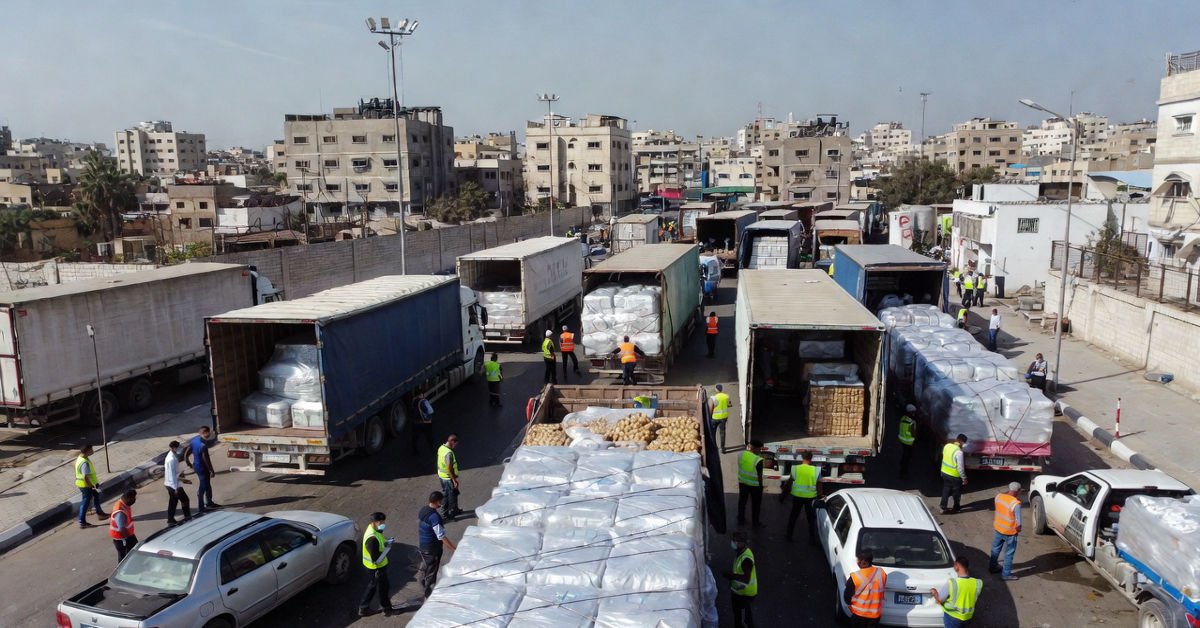
Oxfam refuses to share Palestinian staff details: The UK-based humanitarian organisation Oxfam has refused to provide Israel with personal information about its Palestinian employees working in Gaza, citing serious safety risks and violations of humanitarian principles.
Oxfam said sharing sensitive staff details with a party involved in the conflict could endanger lives, especially as hundreds of aid workers have been killed during ongoing hostilities in the Gaza Strip.
Israel’s New NGO Registration Requirements
As part of new “security and transparency” regulations introduced in 2024, Israeli authorities requested extensive personal, operational, and financial data from international and local humanitarian organisations operating in Gaza, the occupied West Bank, and East Jerusalem.
On January 1, Israel revoked the operating licences of 37 aid organisations, stating they failed to comply with the updated rules. Affected groups reportedly include major international NGOs such as Norwegian Refugee Council, International Rescue Committee, and Oxfam.
Oxfam’s Stand on Staff Safety
Oxfam confirmed it would not hand over information about its Palestinian staff, stressing its responsibility to protect employees in conflict zones.
According to a statement shared with Al Jazeera, an Oxfam spokesperson said that transferring such data would breach humanitarian ethics, data protection laws, and duty-of-care obligations. The organisation highlighted that more than 500 humanitarian workers have been killed since October 2023, underscoring the risks faced by aid personnel in Gaza.
Oxfam also urged Israel to reverse the deregistration process and called on donor governments to intervene to ensure humanitarian access is not obstructed.
Information Requested by Israeli Authorities
Israel’s Ministry for Diaspora Affairs outlined strict data requirements for NGO registration, raising concerns among humanitarian groups.
| Requested Information | Details |
|---|---|
| Identity documents | Passport copies of staff |
| Employment records | CVs and work history |
| Family information | Names of spouses and children |
| Organisational data | Funding sources and operations |
Israeli officials said organisations suspected of incitement, denial of Israel’s existence, or support for armed resistance would be barred from operating.
Divided Responses Among Aid Organisations
Israel claims 23 organisations have agreed to the new rules, while others have either refused or are still assessing their position.
The Palestinian NGOs Network (PNGO) strongly criticised NGOs that complied, warning that the policy poses serious risks to local staff and violates international humanitarian law.
| Stakeholder | Position |
|---|---|
| PNGO | Strongly opposed compliance |
| Oxfam | Refused to share staff data |
| Israeli authorities | Enforcing new registration rules |
MSF’s Conditional Compliance Draws Criticism
Doctors Without Borders (MSF) announced it may share a limited list of Palestinian and international staff names with Israel, stating that safety considerations would guide any disclosure. However, MSF described the demands as unreasonable.
This decision sparked criticism from doctors, activists, and former MSF staff, who warned that such disclosures could place Palestinian aid workers at further risk in a highly volatile environment.
A former MSF employee, speaking anonymously, expressed concern over what they described as an impossible choice between compliance and losing the ability to provide medical care in Gaza.
Growing Risks for Humanitarian Workers
The International Rescue Committee noted that Palestinians account for nearly 20 percent of all aid workers killed globally since records began, highlighting the extreme dangers faced by local humanitarian staff.
| Key Indicator | Data |
|---|---|
| Aid workers killed since Oct 2023 | 500+ |
| NGOs affected by deregistration | 37 |
| Share of Palestinian aid worker deaths | ~20% |
Conclusion
The refusal by Oxfam to share Palestinian staff details reflects growing concern within the humanitarian sector over staff safety, neutrality, and the protection of civilians during conflict. As regulatory pressure increases, aid organisations continue to face difficult decisions that could shape the future of humanitarian operations in Gaza and beyond.