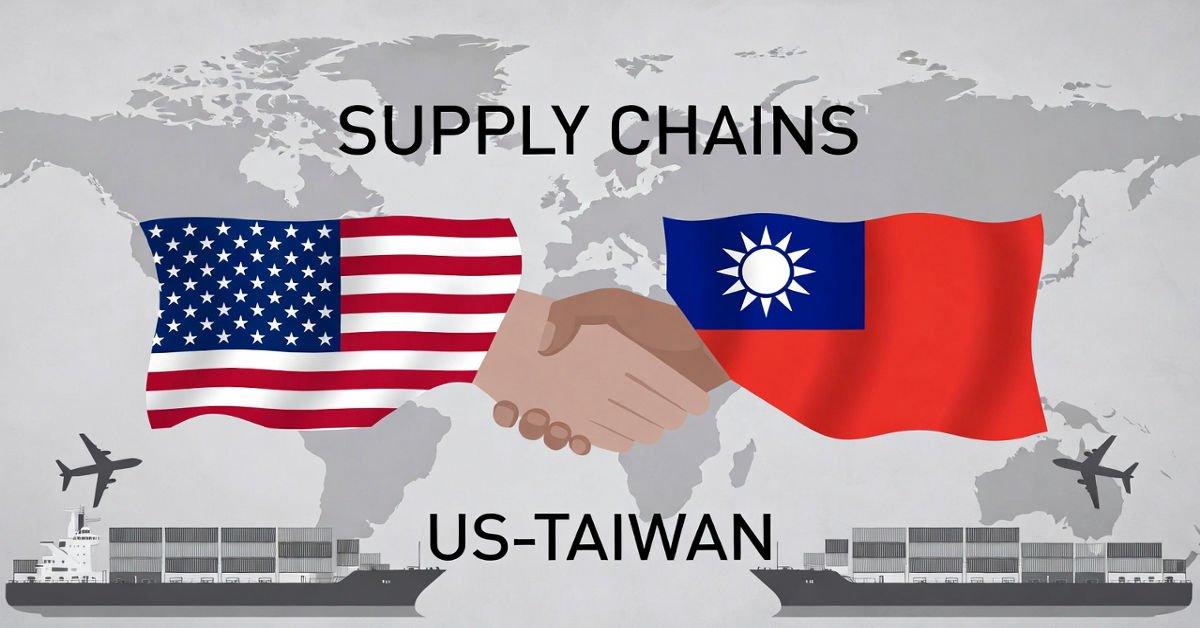
The United States and Taiwan have finalized a landmark trade agreement aimed at reducing tariffs and expanding bilateral commerce. Announced on Thursday, the deal lowers general tariffs on Taiwanese exports to the US from 20 percent to 15 percent, aligning Taiwan with major Asian trading partners such as South Korea and Japan.
In exchange, Taipei has committed to purchasing approximately $85 billion worth of US energy, aircraft, and industrial equipment, marking one of the most significant commercial agreements between the two sides in recent years.
Key Highlights of the Agreement
Under the new framework, Taiwan will eliminate or reduce 99 percent of its tariff barriers and offer preferential access to a wide range of American products. These include:
-
Auto parts
-
Chemicals
-
Machinery
-
Health and medical products
-
Dairy and pork
The US will also remove tariffs on many Taiwanese exports such as chalk, castor oil, pineapples, and ginseng, providing broader access for Taiwanese farmers and manufacturers.
Trade Agreement Overview
| Category | Details |
|---|---|
| New tariff rate on Taiwanese goods | 15% (down from 20%) |
| Taiwan’s purchase commitment | $85 billion in US energy, aircraft & equipment |
| Tariff barriers removed by Taiwan | 99% of existing barriers |
| Major beneficiaries | Agriculture, machinery, health products, consumer goods |
| US exemptions granted | Chalk, castor oil, pineapples, ginseng, more |
Presidential Reaction from Taipei
Taiwanese President William Lai Ching-te described the agreement as a “pivotal moment” for the island’s economy. He confirmed that tariff exemptions would apply to nearly 2,000 Taiwanese products, reducing the overall average tariff rate to 12.3 percent when carve-outs are included.
“From Phalaenopsis orchids and tea to bubble tea ingredients, pineapple cakes, taro, mangoes, and coffee, these products that represent Taiwan will become more price-competitive in the US market,” Lai said.
He emphasized that the goal is not only to boost exports but also to help Taiwanese brands expand into international markets with stronger competitiveness.
What About Taiwan’s Chip Industry?
Notably, the agreement does not include direct new commitments regarding Taiwan’s semiconductor sector, which contributes up to 20 percent of the island’s GDP. Taiwan’s exports surged 35 percent in 2025, reaching a record $640.75 billion, largely driven by global demand for AI chips.
While there were no fresh pledges tied to chip investments, the Office of the US Trade Representative acknowledged earlier commitments, including plans by Taiwan Semiconductor Manufacturing to invest $100 billion in the US.
US Perspective on the Deal
US Trade Representative Jamieson Greer said the agreement builds on long-standing trade relations and will significantly strengthen supply chain resilience, especially in high-technology sectors.
The administration of President Donald Trump framed the agreement as part of a broader strategy to reinforce economic and national security interests across the Asia-Pacific region.
Growing Trade Dependence
The US has become Taiwan’s largest export destination for the first time since 2000. In 2025, nearly one-third of Taiwan’s total exports were shipped to the US, highlighting the growing economic interdependence between the two economies.
Conclusion
This pivotal US–Taiwan trade deal marks a major shift in tariff policy and commercial cooperation. By cutting tariffs, opening markets, and committing to large-scale purchases, both sides aim to strengthen supply chains and stimulate long-term economic growth. While the semiconductor sector remains outside the core of this agreement, the broader impact on agriculture, manufacturing, and consumer goods is expected to be substantial.