A Break in a Longstanding Alliance
For decades, Iran’s traditional bazaar merchants were considered among the most reliable supporters of the Islamic Republic. Their economic influence and political loyalty helped stabilise the system during times of upheaval. Today, that relationship is visibly fracturing.
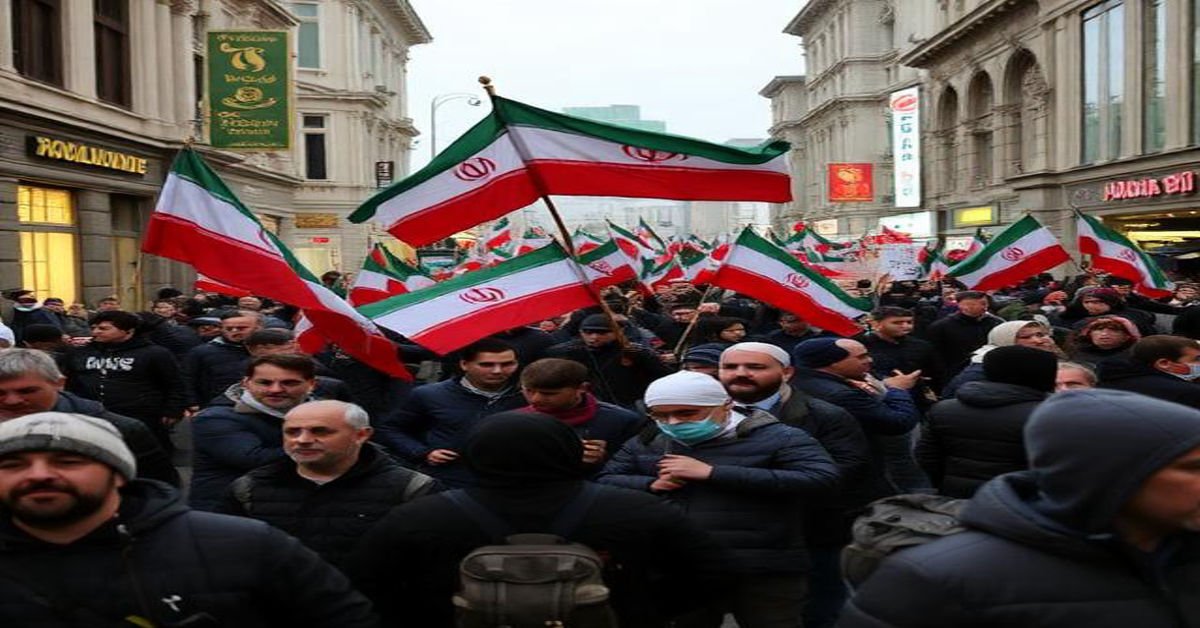
As protests spread across Iran, demonstrations have erupted inside Tehran’s Grand Bazaar—a symbolic and economic heart of the capital. In his first public remarks since unrest intensified, Supreme Leader Ali Khamenei attempted to distinguish between what he described as the bazaar’s “legitimate grievances” and what he labelled nationwide “rioting.” He reiterated that officials should engage with protesters but warned that disorder would not be tolerated.
Despite this rhetorical separation, security forces have deployed tear gas inside the bazaar, and demonstrators have openly chanted slogans critical of the political leadership. The effort to portray the bazaar as separate from broader unrest has failed to reflect realities on the ground.
The Bazaar’s Revolutionary Legacy
Khamenei’s emphasis on the bazaar’s loyalty is rooted in history. Bazaar merchants played a decisive role in the 1979 revolution that toppled Mohammad Reza Shah Pahlavi. In the decades that followed, they maintained close ties with conservative political networks and religious institutions.
Their support was not merely symbolic—it was institutional. Bazaar-linked figures helped shape key state bodies, creating a mutually beneficial arrangement: loyalty in exchange for influence and economic access. However, this political capital has steadily eroded over the past two decades.
From Economic Power to Structural Marginalisation
Table 1: The Bazaar’s Changing Economic Position
| Period | Bazaar Influence | Key Developments |
|---|---|---|
| 1980s | High | Import licences, preferential exchange rates |
| 1990s | Strong | Political backing of market reforms |
| 2000s | Declining | Rise of IRGC-linked enterprises |
| 2010s–2020s | Marginalised | Sanctions economy, inflation, state monopolies |
In the years following the revolution, bazaar merchants enjoyed privileged access to import licences and foreign exchange at official rates far below market value. This allowed them to dominate domestic trade throughout the 1980s.
Economic liberalisation in the 1990s further reinforced their influence. Political groups associated with the bazaar supported President Akbar Hashemi Rafsanjani’s market reforms, sidelining leftist factions while preserving conservative dominance over powerful institutions such as the Guardian Council and the judiciary.
Even under reformist President Mohammad Khatami, the bazaar’s economic position remained largely intact, shielded by conservative control over unelected institutions.
The Turning Point: Privatisation and Power Shifts
The decisive rupture came during the presidency of Mahmoud Ahmadinejad. While the bazaar initially backed his 2005 election, his economic policies accelerated its decline.
Under a revised interpretation of Article 44 of Iran’s Constitution, privatisation enabled the transfer of state assets to entities affiliated with the Islamic Revolutionary Guard Corps (IRGC) and major religious foundations, known as bonyads. These organisations were reclassified as “public, non-governmental entities,” allowing them to acquire vast economic holdings with minimal oversight.
The Rise of a New Economic Elite
Table 2: Key Economic Power Centres in Iran
| Entity | Sector Influence | Role in Economy |
|---|---|---|
| IRGC | Infrastructure, energy, banking | Sanctions management, major contracts |
| Bonyads | Industry, real estate | Asset consolidation |
| Bazaar | Retail, trade | Declining market access |
As sanctions intensified, the IRGC emerged as a dominant economic actor, controlling ports, airports, and supply chains critical for sanctions evasion. Major bonyads, including the Mostazafan Foundation and Setad, expanded into sprawling conglomerates spanning multiple sectors.
Together, these institutions formed a powerful political and economic bloc commonly known as the Principlists, sidelining the bazaar’s traditional allies and dismantling earlier power-sharing arrangements.
Sanctions, Smuggling, and Discontent
International sanctions imposed between 2010 and 2012 severely constrained Iran’s oil exports and banking system. In response, the state developed informal trade networks, many of which were controlled by IRGC-linked entities.
While these mechanisms kept goods flowing, they further marginalised independent merchants. Bazaar traders, lacking access to sanctioned logistics routes and state-backed capital, found themselves unable to compete.
This discontent erupted publicly in 2008, when bazaar merchants staged coordinated strikes—their first open defiance since the revolution. Since then, inflation, currency depreciation, and declining purchasing power have only deepened frustrations.
A Warning Sign for the State
The current protests reflect more than temporary economic grievances. They highlight a long-term transformation that has hollowed out one of the regime’s historic pillars of support.
For years, the bazaar functioned as a stabilising force, helping maintain order during crises. Its visible participation in unrest signals that dissatisfaction now cuts across traditional political boundaries.
Khamenei’s insistence on the bazaar’s loyalty suggests concern rather than confidence. The fact that protests persist within the bazaar itself underscores the limits of narrative control.
Limited Options, Rising Risks
In theory, the state could attempt to rebuild trust with bazaar merchants by easing sanctions and curbing the dominance of IRGC-linked conglomerates. In practice, both options appear remote.
Sanctions relief remains uncertain amid ongoing disputes over Iran’s nuclear programme, while reducing the economic power of the IRGC and bonyads offers little incentive to the current political establishment.
As a result, repression increasingly appears to be the government’s primary response—despite the risk of alienating a constituency that once served as a cornerstone of stability.