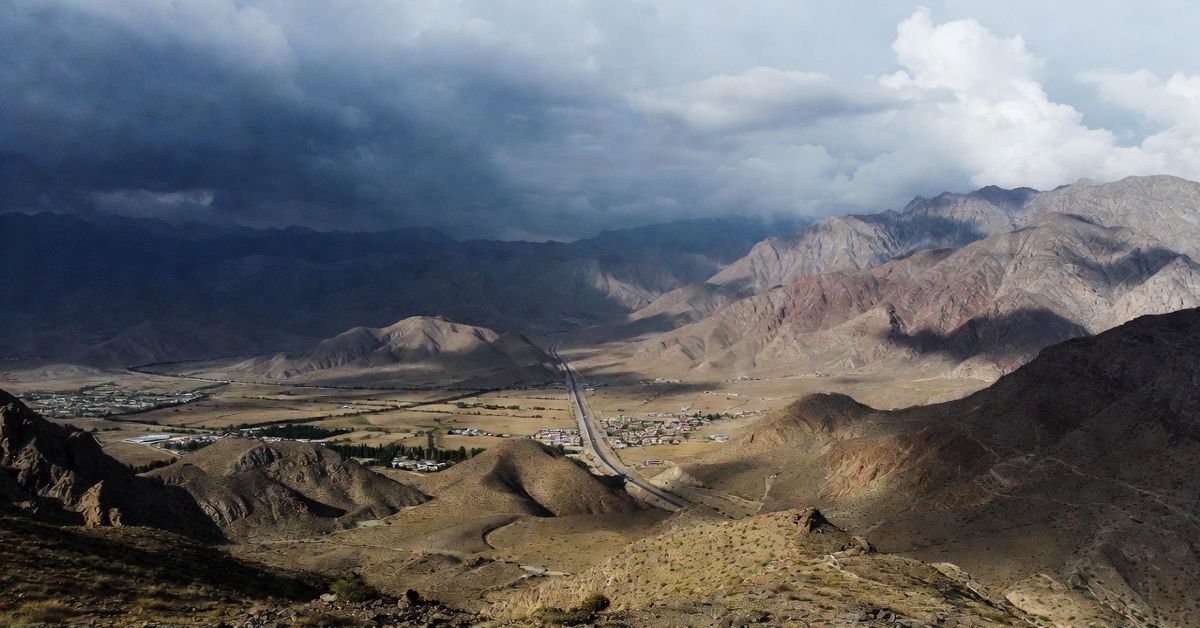
Stretching across Pakistan’s southwestern frontier, Balochistan is the country’s largest province by land area, yet it remains its least developed. Rich in natural resources and strategically located near key international trade routes, the region has also been the site of Pakistan’s longest-running internal conflict. Despite repeated military operations and political initiatives, peace has remained difficult to achieve.
A Region Shaped by History and Mistrust
The roots of unrest in Balochistan go back to the creation of Pakistan in 1947. At the time of independence, Balochistan was not a single political unit. Some areas were directly governed by the British, while others were semi-autonomous princely states such as Kalat, Makran, Las Bela, and Kharan.
Initially, the Khanate of Kalat was recognised as independent. However, concerns over Balochistan’s strategic coastline and regional security soon changed the situation. In March 1948, the Khan of Kalat agreed to join Pakistan, a decision that was strongly opposed by some Baloch leaders. This disagreement triggered the first armed resistance in the province, setting a pattern that would repeat over decades.
Early Rebellions and State Responses
Over time, a recurring cycle took shape: political exclusion led to armed resistance, followed by military action, temporary calm, and renewed unrest. Several major uprisings have marked this trajectory.
| Period | Key Trigger | Outcome |
|---|---|---|
| 1948 | Accession of Kalat to Pakistan | Short-lived rebellion suppressed |
| 1958 | One Unit policy in West Pakistan | Arrests and executions of Baloch leaders |
| 1960s | Opposition to military rule | Limited insurgency |
| 1973–1977 | Dismissal of elected provincial government | Large-scale conflict, thousands killed |
| 2000s–present | Resource disputes and security operations | Prolonged low-intensity conflict |
The most intense phase occurred during the 1970s after the elected Balochistan government was dismissed by the federal administration. Thousands of fighters clashed with federal forces until a general amnesty was announced following a military takeover in Islamabad. While violence subsided, core grievances were left unresolved.
Natural Resources and Economic Grievances
Balochistan holds vast reserves of natural gas, copper, gold, and other minerals. However, many local communities argue that they see little benefit from these resources. Poor infrastructure, limited employment opportunities, and weak public services have deepened resentment.
Major development initiatives, including deep-sea ports and mining projects, have further intensified debates around ownership, revenue sharing, and local participation.
| Resource | Location | Key Concern |
|---|---|---|
| Natural Gas | Sui region | Unequal revenue distribution |
| Copper & Gold | Reko Diq | Local employment and control |
| Port Development | Gwadar | Displacement and marginalisation |
The Modern Phase of Insurgency
The current phase of conflict escalated in the early 2000s, particularly after the killing of prominent tribal leader Akbar Bugti during a military operation in 2006. His death became a powerful symbol for many Baloch activists and marked a turning point in the movement.
Armed groups such as the Baloch Liberation Army and the Balochistan Liberation Front claim they are resisting political and economic marginalisation. In recent years, younger and urban Baloch activists, including women, have also taken part in protests and rights campaigns.
Security Measures and Human Rights Concerns
The state’s response has largely relied on heavy security deployment. Human rights organisations and activists have raised concerns over alleged enforced disappearances and extrajudicial actions. Authorities deny these claims, stating that many missing individuals may have joined armed groups or fled across borders.
This environment of fear and mistrust has weakened cooperation between local communities and the state, making intelligence gathering and long-term stability more difficult.
Strategic Importance and External Dimensions
Balochistan has gained further prominence due to the China–Pakistan Economic Corridor, a multi-billion-dollar infrastructure project linking western China to the Arabian Sea. While officials describe it as a development opportunity, critics argue that local voices have been excluded from decision-making.
The government has also accused external actors of supporting separatist violence, a claim that remains contested and politically sensitive.
Why Military Solutions Alone Have Fallen Short
Analysts widely agree that geography plays a major role in sustaining unrest. Balochistan accounts for nearly 44 percent of Pakistan’s landmass but has a sparse population and rugged terrain, which makes complete security control difficult.
Experts argue that reliance on force has not addressed the political nature of the conflict. Without trust, intelligence sharing diminishes, and armed groups can continue low-level attacks that expose security gaps.
The Path Toward Lasting Peace
Many observers believe that sustainable peace in Balochistan requires a shift from force-based strategies to political engagement. Confidence-building measures, transparent governance, fair resource sharing, and credible representation are frequently cited as essential steps.
Proposals from analysts include addressing enforced disappearances, strengthening democratic institutions, and establishing mechanisms such as truth and reconciliation processes. Without these measures, cycles of violence are likely to persist.
Conclusion
Balochistan’s conflict is not the result of a single event but a product of decades of mistrust, political exclusion, and unmet economic expectations. While security challenges are real, history suggests that peace cannot be achieved through military means alone. A balanced approach—combining development, dialogue, and justice—offers the most realistic hope for stability in Pakistan’s most complex province.
2 thoughts on “Why peace remains elusive in Balochistan”