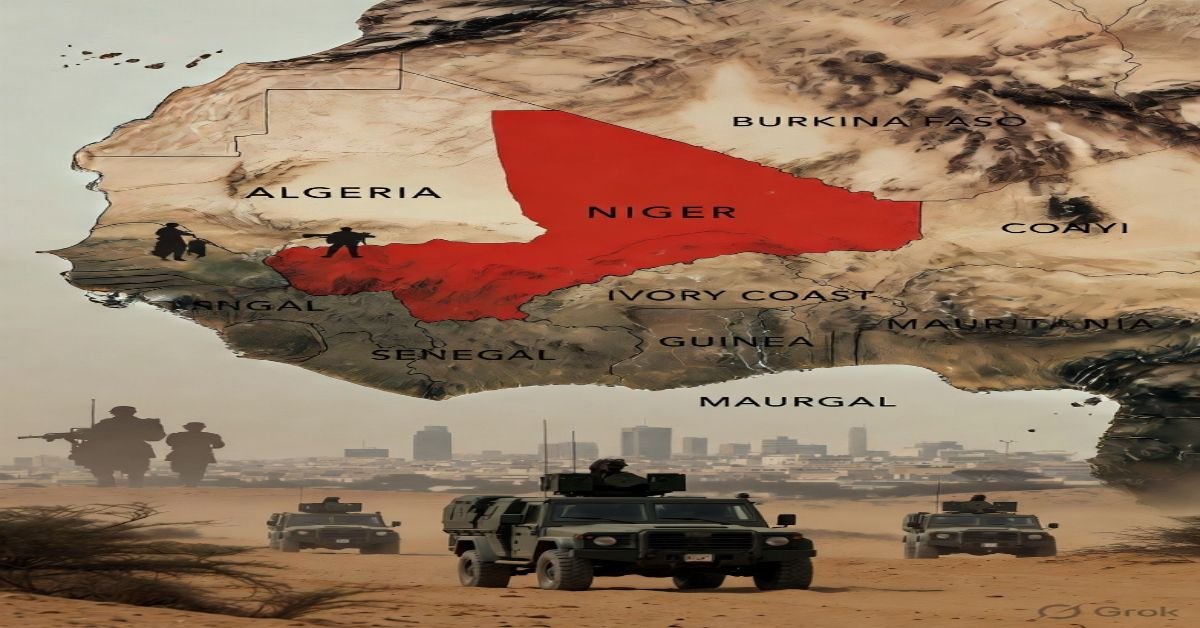
Rival Armed Groups in Mali a major security crisis after coordinated attacks by armed groups exposed weaknesses in the country’s defense system. The recent violence has raised serious questions about Mali’s future political stability, regional security, and the ability of its military-led government to maintain control.
In this article, we examine who the main armed groups are, why rival factions are temporarily working together, the role of foreign powers such as Russia, and what may happen next in Mali.
Overview: Why Mali Is in Crisis
Mali, a landlocked nation in West Africa, has experienced repeated political instability since gaining independence in 1960. Military coups, separatist rebellions, extremist violence, and economic struggles have all shaped the country’s modern history.
The latest wave of attacks marks one of the most serious national security challenges in recent years. Analysts believe the coordinated nature of the assaults shows improved planning among armed groups and highlights vulnerabilities in Mali’s defense structure.
Key Concerns:
- Growing insecurity across northern and central Mali
- Coordinated attacks reaching strategic areas near the capital
- Temporary alliance between historically rival armed groups
- Limited regional military support
- Increasing dependence on Russian security forces
Read more:EU Israel Association Agreement human rights
Major Armed Groups in Mali
Two major armed coalitions are currently at the center of Mali’s conflict.
1) Jama’at Nusrat al-Islam wal-Muslimin (JNIM)
JNIM is one of the strongest extremist armed organizations operating in the Sahel region. It emerged in 2017 from the merger of several armed factions.
Main Objectives:
- Expand regional influence
- Challenge government military control
- Establish strict religious governance in areas under its control
- Reduce Western influence in the region
Strengths:
- Large network of fighters
- Strong desert mobility
- Ability to launch coordinated national attacks
- Deep operational presence across rural Mali
2) Azawad Liberation Front (FLA)
The Azawad Liberation Front is a northern separatist coalition largely dominated by Tuareg groups.
Main Objectives:
- Greater autonomy for northern Mali
- Recognition of Azawad as a distinct region
- Political independence for northern communities
- Resistance against military centralization in Bamako
Unlike extremist groups, FLA presents itself as a political independence movement rather than an ideological armed organization.
Read more:UK universities student surveillance controversy
Comparison Table: Mali’s Main Armed Groups
| Factor | JNIM | FLA |
|---|---|---|
| Core Goal | Religious governance | Regional independence |
| Main Area | Central & Northern Mali | Northern Mali |
| Ideology | Islamist extremist | Separatist nationalist |
| Enemy | Government & rival groups | Government forces |
| Long-Term Strategy | Expansion | Autonomy/independence |
Why Are Rival Groups Working Together?
Although JNIM and FLA have very different goals, they currently share a common opponent: Mali’s government and its allied military forces.
This temporary cooperation is strategic rather than ideological.
Reasons for the alliance:
✔ Shared enemy
✔ Territorial pressure from government offensives
✔ Competition over control of northern regions
✔ Opportunity created by state security weaknesses
Experts believe this alliance is unlikely to remain stable long term because both groups ultimately seek different outcomes.
Mali Government’s Current Challenges
The military government faces pressure on multiple fronts:
Security Challenges
- Defending northern territories
- Preventing attacks near Bamako
- Maintaining public trust
- Managing border security
Political Challenges
- Diplomatic isolation
- Reduced international military backing
- Internal governance pressures
- Economic instability
Regional Challenges
- Weak neighboring allies
- Continued extremist expansion across the Sahel
- Refugee displacement risks
- Cross-border militant movements
Russia’s Growing Role in Mali
After relations with European security partners weakened, Mali increased cooperation with Russian-backed military support.
Russian security involvement has become central to Mali’s military strategy.
Russian Presence Includes:
- Military advisers
- Counterinsurgency support
- Equipment assistance
- Strategic defense coordination
However, analysts note that outside military support alone may not resolve Mali’s long-term instability without political dialogue and internal reforms.
Read more:Oil prices surge US Iran tensions
What Could Happen Next?
Several scenarios may shape Mali’s future:
| Possible Scenario | Likelihood | Impact |
|---|---|---|
| Temporary armed alliance breaks apart | High | Internal fighting resumes |
| Armed groups gain more territory | Moderate | Government loses control |
| Peace negotiations emerge | Moderate | Potential stability |
| Regional conflict expands | Moderate | Sahel instability worsens |
| Foreign involvement increases | Low–Moderate | Geopolitical tensions rise |
Long-Term Solution for Mali
Security experts widely agree that a military-only solution is unlikely to create lasting peace.
Possible solutions include:
✅ National political dialogue
✅ Regional security cooperation
✅ Economic development in conflict zones
✅ Better governance and public trust
✅ Community reconciliation efforts
✅ Balanced international partnerships
Conclusion
Mali stands at a critical crossroads. The temporary cooperation between rival armed groups signals a shifting conflict landscape that could reshape the region’s future. Whether Mali moves toward deeper instability or gradual peace will depend on military strategy, political leadership, regional diplomacy, and the willingness of all sides to pursue long-term solutions beyond armed conflict.
1 thought on “Rival Armed Groups in Mali”